


How to Plan Your B2B Paid Media Strategy for Growth in 2027
Paid media platforms are pretty good at reporting clicks, leads, and attributed conversions. They are less useful for answering the question that matters most: Did those conversions become qualified pipeline and revenue?
Pipeline quality should guide how your B2B paid media strategy and budget are allocated in 2027. Platform metrics are merely inputs, not necessarily proof that a channel deserves more spend.
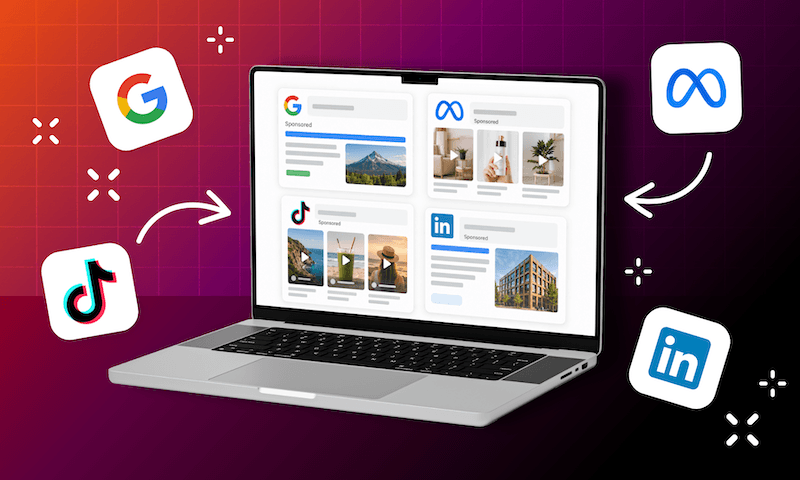
When budget is limited, start by capturing demand that already exists. For many B2B companies, that means prioritizing Google paid search before expanding into LinkedIn, paid social on Meta, display, video, Google Ads Performance Max, or retargeting.
LinkedIn, paid social on Meta, display, video, Google Ads Performance Max, and retargeting still have important roles. But you should fund these channels if (and when) they solve a specific constraint, such as limited awareness, weak account penetration, a demand generation gap, or a lack of buyers progressing through funnel stages, rather than simply because a full-funnel paid media strategy is “supposed” to include them.
Use Pipeline Evidence to Allocate Paid Media Spend
Before comparing channels, define the business outcome the budget needs to support: the revenue goal, target customer, sales stages, acceptable customer acquisition cost, and expected payback period.
Then measure beyond the platform conversion, along this path:
Spend → Lead → Qualified Lead → Opportunity → Pipeline → Revenue → CAC → Payback
.png)
The farther you can follow the path, the more confidently you can allocate spend. A low-cost lead is not automatically valuable if it rarely becomes an opportunity.
As Brennen Keene, Paid Media Manager here at TDR, explained: “We can look all the way down to an individual customer and see what campaign they came from, what the deal size was, and when they entered as a sale. We can actually see that person move through the whole funnel.”
Closed-loop reporting visibility connects campaign spend to actual business results through conversion measurement instead of stopping at the form submission.
But what happens when closed-loop reporting is not available? Use the strongest signal your data supports. Qualified leads, opportunity creation, target-account engagement, and sales feedback are more useful than treating every platform conversion equally. This matters because long-term B2B impact remains difficult to measure. LinkedIn reports that 87% of B2B marketers struggle with it.
Platform attribution can help explain how different touchpoints contributed to a conversion, but it should not be confused with proof that a campaign created business value. For example, Google reports that advertisers switching from non-data-driven attribution models to data-driven attribution saw an average 6% increase in reported conversions. That provides a more complete picture of the customer journey, but CRM outcomes, acquisition cohorts, and incrementality testing should still guide budget decisions.
Use Only Trustworthy Data to Guide Paid Media Spend
CRM and offline conversion imports can help Google, Meta, and LinkedIn optimize toward qualified outcomes instead of raw lead volume, while giving you a practical way to handle Meta paid media measurement and LinkedIn B2B paid media measurement.
Google enhanced conversions and Meta’s Conversions API may also recover conversions missed through browser restrictions or cross-device behavior. Google describes enhanced conversions for leads as an upgraded offline conversion import that can improve reporting durability and accuracy.
Say it with us: Better tracking tools do not fix poor source data. Reliable optimization still depends on consistent CRM stages, usable customer records, appropriate consent, and sound implementation.
Every budget review should also separate confirmed results from what remains uncertain, including delayed CRM entries, incomplete source tracking, and opportunities still moving through the sales cycle. Better to admit you’re unsure than to feign precision.
Start With Paid Search When Budget Is Tight
When resources are limited, spreading a small budget evenly across platforms just creates underfunded campaigns (and lots of them).
Instead, start where active demand already exists. For many B2B companies, that means Google Search.
Search reaches buyers already looking for a product, service, or solution. Before reducing the overall investment, remove costly queries and campaigns that consume spend without producing qualified outcomes. Move that budget toward stronger terms, audiences, offers, and conversion paths.
Retargeting should also remain proportional to the number of qualified prospects entering the funnel.
“The biggest mistake I’ve seen is clients want to do all of it at once, and they are very disproportionate in their budget allocation. They’ll want to put $500 toward top-of-funnel prospecting and $5,000 toward retargeting. Obviously, we need to get people into the top of the funnel to be able to retarget them.” —Brennen Keene, Paid Media Manager
Retargeting can advance existing interest, but it can’t create a meaningful audience from a small prospecting investment.
For the same reason, avoid fixed allocation percentages. The right mix depends on available demand, audience size, deal economics, sales-cycle length, downstream quality, and confidence in measurement.
Add Awareness Spend When Paid Search Cannot Grow
Search captures demand, but it does not create unlimited demand.
Awareness investment becomes more useful when qualified search volume is limited, target accounts do not know the brand, the company is entering a new market, or retargeting audiences are too small to support continued growth.
When qualified search volume is limited or retargeting audiences are too small, LinkedIn, Meta, display, connected TV, video, or Google Demand Gen can support demand generation and introduce the problem, build familiarity, and create audiences for future nurture.
Judge that investment by its job. Early-stage campaigns should first demonstrate relevant reach, engagement, account penetration, or audience growth. They should not be expected to produce the same immediate return as high-intent Search.
Cheap CPMs and clicks only matter when the media reaches the right buyers and eventually contributes to pipeline growth.
Give Each Paid Media Channel One Clear Job
A multi-channel paid media strategy does not require every platform to perform every funnel stage.
Clear channel roles make the system easier to manage and measure. Here’s a quick overview:
- Google Search: Capture active demand through high-intent searches.
- Performance Max: Expand conversion activity across Google inventory when strong conversion signals and reliable quality data are available.
- LinkedIn: Reach specific accounts, industries, roles, and buying-group members when precision matters more than inexpensive reach.
- Meta, display, and video: Build awareness, introduce the problem, and create audiences for later nurture.
- Retargeting: Move known prospects forward with proof, comparisons, and conversion offers based on prior engagement.
Keene described this division of labor in practical terms: “Maybe we’ll recommend awareness on connected TV or Google Display and then conversions on LinkedIn, Facebook, and Performance Max. Going across platforms is the main thing for a full-funnel approach.”
The paid media mix will vary, but each channel should solve an existing, defined problem rather than recreate the entire funnel on its own.
Give Buyers the Right Next Step at Each Funnel Stage
A cold prospect may not be ready for a demo. It’s likely that they’re still defining the problem, comparing options, or trying to get internal agreement.
With that in mind, match the offer to that reality. These colder audiences may need education, research, or diagnostic content. By contrast, warmer audiences may need case studies, comparisons, ROI evidence, or a consultation.
This understanding is especially important in B2B buying groups. Gartner found that 74% of buyer teams demonstrated unhealthy conflict during the decision process. Paid media should actually help stakeholders research and align, not just repeat the same conversion request. Keep prospecting, nurture, and conversion campaigns distinct enough that each has a clear audience, offer, and success signal.
Wait for Qualified Pipeline Before Reallocating Paid Media Spend
B2B campaigns can look weak before their leads have had time to mature.
Set the expected conversion lag window before launch. Align on when the team expects to see leads, qualified opportunities, pipeline, and revenue.
Review leading indicators such as delivery, search-query quality, engagement, audience growth, and tracking health each week, as well as qualification, pipeline, CAC payback, and revenue by acquisition cohort over a longer period.
When the evidence conflicts, investigate before making a major cut. The problem may be poor CRM mapping, slow sales follow-up, a weak offer, landing-page friction, incomplete conversion imports, or a reporting window that is too short.
Scale a channel when its evidence clears the agreed allocation rule, not simply because the channel reports inexpensive conversions. The budget may need to change, but be careful not to jump the gun. The diagnosis should come first.
Do Not Let Benchmarks Set Your CAC Target
Benchmarks provide context. What they shouldn’t do is determine your financial targets. Before applying one, ask whether it reflects a comparable market, conversion definition, attribution model, spend level, audience, and sales cycle.
One business may need a high volume of modest opportunities, while another may only need a few highly qualified leads capable of producing large deals. Their acceptable costs will also be very different.
Your CAC target should come from deal value, gross margin, close rate, retention, and the amount of time the company can wait to recover its investment.
Attribution also has limits. Last-touch reporting may identify the campaign that completed the journey while understating the channels that created awareness or influenced other stakeholders.
And most importantly, when direct tracking cannot settle the question, use holdout tests, conversion-lift studies, branded-search lift, cohort analysis, or marketing mix modeling.
A healthy B2B paid acquisition strategy does not spread money across channels simply to appear full-funnel. It funds the channel and stage best positioned to solve the company’s current constraint, then uses qualified pipeline, CAC, payback, and revenue to decide where the next dollar goes.
share this article

Get In touch
We’d love to share how digital marketing can help elevate your brand — and your business’s bottom line.


821 E Washington Ave #200
Madison, WI 53703
608.836.7464


