


Optimized SEO Meta Descriptions: Your Simple Formula
Marketers, you know the drill: You write a strong blog or webpage, optimize the headers, sprinkle in your keywords, maybe even get a few quality backlinks…and then you drop in whatever SEO meta description comes to mind. What does it really matter, anyway?
Here's why you shouldn't mail it in when it comes to metas: Even though meta descriptions don't directly influence rankings, they heavily influence whether someone chooses you or your competitor in the search results. That means they sit squarely at the intersection of search visibility and persuasion — the exact place where your organic strategy either grows or flatlines.
Google bolds relevant keywords that match a user's search query, so a strategically written description works like a mini-advertisement for your page. A weak one gets ignored, rewritten, or worst of all, outperformed—even by competitors ranking below you or featured snippets that steal the click.
How to Write Better SEO Meta Descriptions
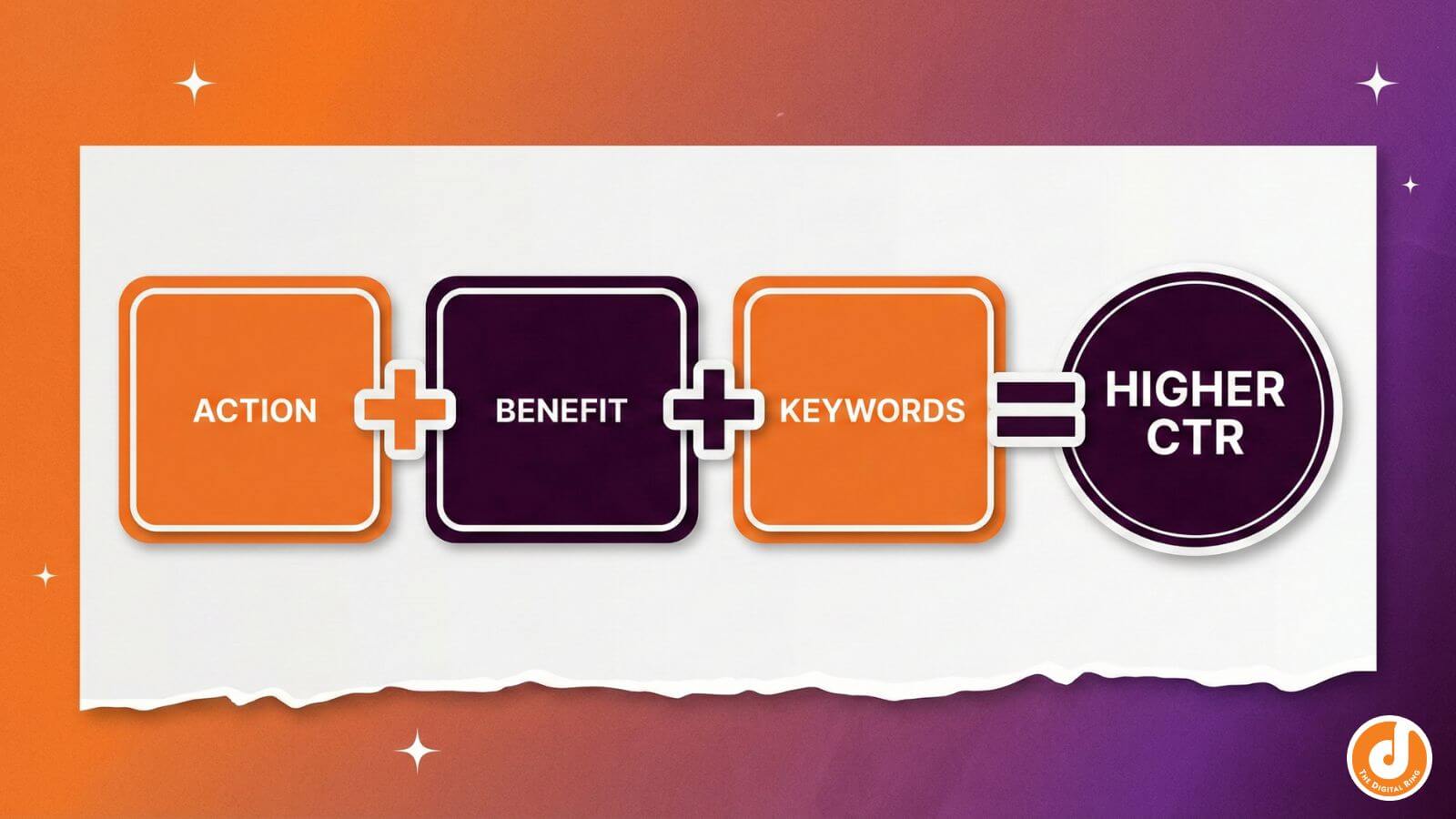
- Use the action + benefit + keywords formula: Give a clear action, promise a clear benefit, then weave in keywords naturally.
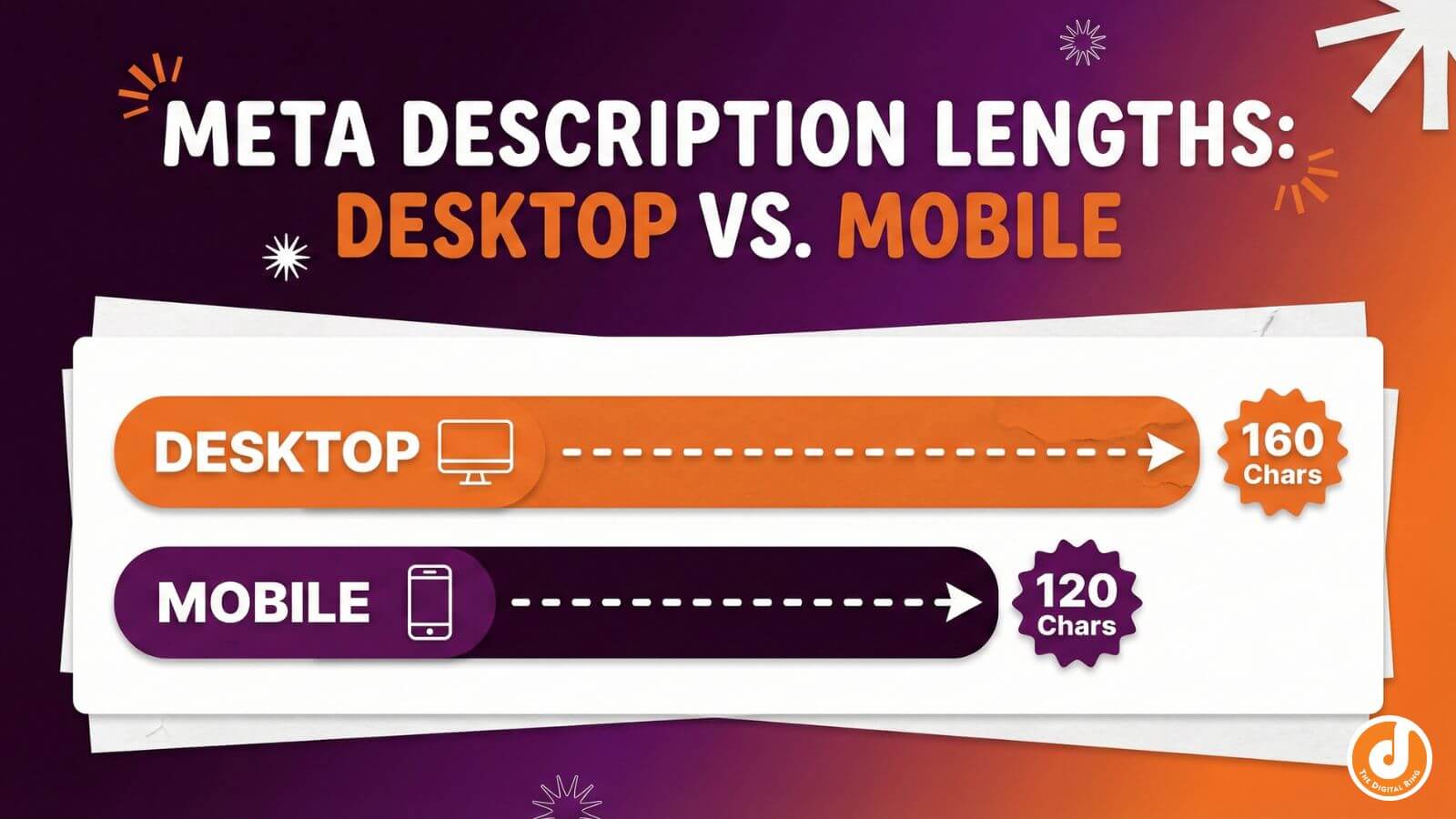
- Stay within 150–160 characters (desktop) or ~120 characters for mobile: Truncated descriptions lose critical persuasion power.
- Focus on underperforming pages first: High impressions + low CTR = your fastest wins.
- Write unique descriptions for important pages: Duplicate or generic ones almost guarantee that Google will rewrite them.
- Accept the rewrite reality: Google adjusts or replaces meta descriptions 60–70% of the time; your job is to write something useful enough that it keeps yours when possible.
Meta Descriptions Drive Clicks, Not Rankings. Here’s Why That Matters.
When you're writing an SEO meta description, you're essentially trying to persuade an actual human who's scanning a search engine results page (SERP) full of ten nearly identical blue links.
It’s your last shot to win the click.
It’s the only copy most users see before deciding if your page is worth their time.
And it has a measurable influence on organic search traffic, even without an algorithmic ranking boost.
The numbers make this painfully clear. A page ranking #5 usually sees about a 5% CTR. If you're seeing 2%, you’re leaving opportunity (and revenue) on the table. Tools like Advanced Web Ranking give you solid CTR benchmarks per position — benchmarks you can use to identify which pages are silently underperforming.
Think of this as conversion optimization for your search engine optimization strategy. Every impression without a click is a lost conversation with your user. Meta tag optimization lets you reclaim those conversations.
The 3-Part Formula: Action + Benefit + Keywords
You’ve got roughly 150 characters to accomplish three jobs:
- Tell the user what to do
- Explain why it’s worth their click
- Include keywords your audience is searching for
Start With the Action
Clear verbs work best:
- Learn
- Discover
- Find out
- Compare
- Start
- Get
These words signal usefulness and expectation. They also reduce friction by clarifying the next step.
Follow the Benefit
Benefits keep users moving. A compelling description explains why someone should trust your page over the other nine links they're considering.
Examples:
- “Improve your click-through rate.”
- “Find the right steps for your business.”
- “Compare options quickly with expert guidance.”
The more specific the outcome, the stronger the hook.
Include Keywords Naturally
Here's where matching search intent truly matters. When someone searches and sees bolded terms in your page description, your result looks more relevant.
But the second you force keywords like “seo meta description”, “meta description seo”, or “search engines” into awkward corners of your sentence (kinda like we just did), users instantly notice the clunkiness. Trust evaporates.
So here’s the rule: Include keywords only when they reinforce meaning — never at the expense of clarity.
Example Formula in Action
“Start writing stronger meta descriptions so you can boost your click-through rate and understand what Google highlights in search results.”
It includes the action, benefit, and keywords, all without sounding robotic.
And when character space gets tight, prioritize the action-to-benefit flow over keyword volume. Users choose clarity over keyword stuffing 100% of the time.
Character Limits and Technical Rules That Actually Matter
Technical constraints impact how your description appears — and whether it gets cut off by Google’s interface.
Here’s what you need to keep in mind:
1. Aim for 150–160 Characters for Desktop
That’s your sweet spot. Anything above ~160 characters risks truncation.
2. Mobile Truncates Earlier (~120 characters)
If your brand gets majority mobile traffic, make mobile your default. Otherwise, 150 characters covers both well enough.
3. Google Rewrites 60–70% of Descriptions
They do this when the existing meta description:
- Doesn’t match the page content
- Doesn’t match user search intent
- Uses duplicates across multiple URLs
- Is too short, too vague, or simply underperforms
The best way to slow the rewrites?
Align your description tightly with the page content and match it to common keyword intent.
4. Unique Descriptions for Every Important Page
Duplicate descriptions confuse crawlers and users. Worse, they encourage Google to generate its own HTML snippet — one you can't control.
5. Never Mislead Users
Your meta tags should reflect exactly what the content delivers. Misleading descriptions produce high bounce rates, low engagement, and a worse user experience — all of which undermine your long-term results in Google search.
When to Actually Optimize Your Meta Descriptions
Rewriting all your meta descriptions is a waste of time. The highest ROI comes from rewriting pages that meet this criteria:
- High impressions
- Lower-than-expected CTR
- Stable ranking position
If you’re ranking #3 but seeing #7-level CTR numbers, the description is probably the problem.
Step 1: Pull CTR Data From Google Search Console
Sort by:
- High impressions
- Average position
- CTR
These three columns tell you everything.
Step 2: Compare to CTR Benchmarks
If your page is far below industry averages for its position, it’s a description problem, not a ranking problem.
Step 3: Rewrite → Wait → Measure
Treat it like a lightweight A/B test:
- Rewrite description
- Wait 4–6 weeks
- Check CTR movement
- Repeat if needed
Remember: Your job is to optimize based on real-world user behavior, not hypothetical perfection.
Step 4: Run This Analysis Quarterly
Monthly is too granular, yearly is too slow. Quarterly keeps you responsive without burning time.
And once you’ve rewritten the obvious underperformers, stop. Move on. Your energy should be dedicated to producing high-value content, not endless tweaking.
Ready to improve your organic performance one click at a time?
If you want expert help writing better meta descriptions, auditing your pages, or refining your overall content strategy, The Digital Ring can walk you through it step-by-step. We want to help you turn your search impressions into measurable growth. Reach out to build something that earns the click and the conversion.
share this article



Get In touch
We’d love to share how digital marketing can help elevate your brand — and your business’s bottom line.


821 E Washington Ave #200
Madison, WI 53703
608.836.7464


