


Using Video in Digital Marketing: Where It Actually Works
Do you think of video as advertising? After all, that’s where budgets go, where expectations sit, and where results get judged. But here’s the truth: Companies getting the most value from using video in digital marketing are applying it beyond advertising, in places with far less competition for attention: recruiting, sales conversations, and email.
That difference matters. When you move video upstream or downstream in the customer journey, you reduce cost per outcome while increasing engagement and conversion rate across multiple touchpoints.
Buyers, candidates, and prospects already prefer video as a format. 78% say they’d rather watch a short video than read about a product or service, according to Wyzowl. That preference shapes how people evaluate options, form trust, and make decisions. It also raises a bigger question for many teams: Why use video in marketing?
This article breaks down where video actually performs across your business, why it works in each context, and what realistic execution looks like if you want to see measurable video ROI.
Key Takeaways
- Video drives revenue directly: 83% of video marketers say it increased sales, and 85% say it helped generate leads.
- The biggest opportunity isn’t advertising: Recruiting, sales, and email offer the highest leverage per production dollar.
- One production effort supports multiple channels: A single shoot can fuel recruiting, sales outreach, email campaigns, and website content.
- Production quality signals brand quality: Poor video undermines trust. Strong video reinforces it at every stage of the customer journey.
Why Video Outperforms Other Content Formats
The effectiveness of video comes from a combination of format preference, platform behavior, and how humans process information. These same principles apply whether you’re building brand awareness or influencing purchase intent.
Video Aligns With How People Prefer to Learn
Consumer attention is limited (thanks, TikTok). Video captures more of it because it combines motion, audio, and visual storytelling into a single format.
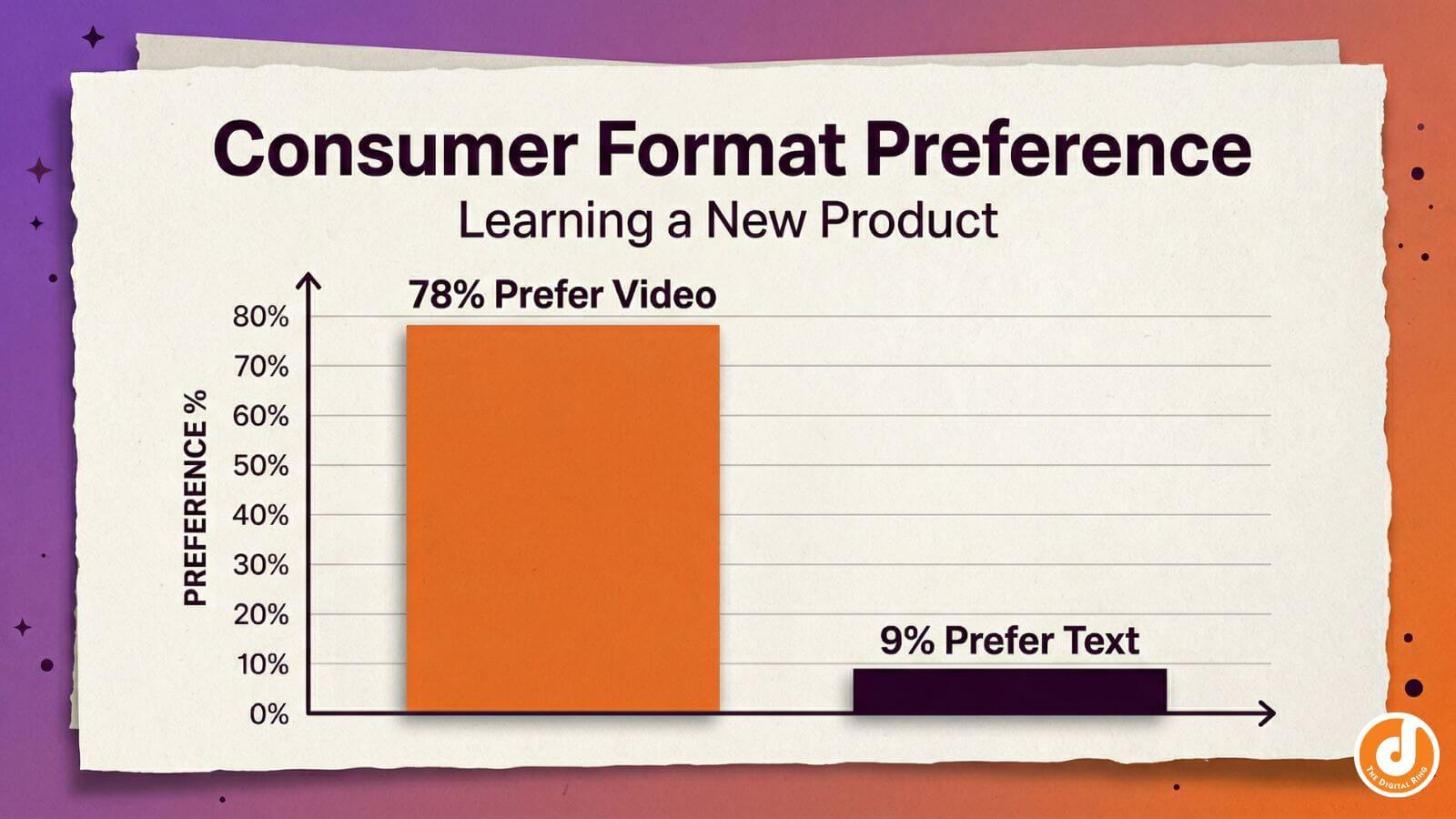
78% of consumers prefer short-form content to learn about a product or service, compared to just 9% who prefer text. That preference directly impacts engagement rate and audience retention.
A product demonstration video, for example, shows how something works in seconds. A written explanation requires interpretation, time, and effort. That difference compounds across every stage of the funnel.
Video Improves SEO and Organic Discoverability
Using video in digital marketing strengthens your organic acquisition strategy.
Search engines measure user behavior. When video is embedded on a page, users spend more time engaging with the content. That increased dwell time signals relevance, which can improve rankings and SERP visibility.
Video content is also 50 times more likely to rank organically than plain text, according to Sagapixel. That advantage comes from a combination of user engagement signals and the ability to appear in video-specific search results.
For example:
- A service page with an explainer video increases time on page
- A blog with embedded video improves click-through rate from search
- A landing page with a product demonstration reduces bounce rate
Each of these contributes to stronger organic reach over time.
Video Delivers Measurable ROI
Video ROI is no longer speculative. In fact, a whopping 93% of video marketers report a positive return.
The mechanism is straightforward:
- Higher engagement leads to longer attention
- Longer attention increases understanding
- Better understanding increases conversion rate
For example, adding a short explainer video to a pricing page often increases conversion by reducing confusion. Prospects move forward because they understand the value more clearly. If you’ve ever wondered “Why use video in marketing?”, this is where the answer becomes tangible: it directly impacts conversion and revenue.
Adoption Signals Competitive Risk
Gone are the days when video was considered an “emerging” strategy. In 2026, it’s well-established.
91% of businesses now use video as a marketing tool, up from 61% a decade ago. That level of adoption signals maturity in the channel.
When your competitors invest in video content strategy (and you fail to), the gap grows fast. You’ll see it right where you wish you wouldn’t: In engagement, organic reach, and trust building.
High-Value Use Cases To Get More From Your Video Marketing
Most companies use video for ads…and stop there. The strongest returns come from strategically using video in digital marketing when it solves specific communication gaps across the customer journey.
Recruiting: Show Candidates What a Job Listing Can’t
Culture is visual. Candidates want to understand how teams interact, what the environment feels like, and whether they can see themselves in that setting. That type of information doesn’t translate well through text — especially not when your candidates are completing their 10th application of the day.
A short recruiting video can:
- Demonstrate real team dynamics
- Highlight leadership style and communication
- Showcase the physical or remote work environment
This improves candidate quality. People who recognize a mismatch will opt out earlier, which reduces wasted time during interviews.
The asset also has longevity. A well-produced recruiting video often remains relevant for 18 to 24 months, making the cost per hire significantly lower over time.
Sales: Give Prospects Something a Slide Deck Can’t Deliver
At the consideration stage, buyers are comparing options and evaluating risk. This is where video has the most direct impact on conversion rate.
A product demonstration or explainer video reduces friction. Instead of describing features and hoping your audience buys in, you show differentiators in action.
Examples of high-performing sales videos include:
- Product walkthroughs that highlight core functionality
- Customer testimonial videos that build trust through storytelling
- Personalized prospecting videos that increase engagement in outreach
Video also improves differentiation. A short video embedded in a sales email stands out in a crowded inbox and signals effort. That small signal increases click-through rate and response.
These assets scale across channels. A single customer story video can be used in:
- Sales emails
- Proposal presentations
- Website case studies
- Paid campaigns
That reusability factor improves overall video ROI.
Email: Put Video Assets in Front of More People
Email isn’t the reason to create video assets, but it is a distribution channel — and an important one at that.
Once you’ve produced video assets, email allows you to extend their reach across different audience segments with minimal additional effort.
For example:
- A recruiting video sent to a candidate nurture list
- A product demonstration sent to warm prospects
- A testimonial video sent after a sales call
Each use case supports a different stage of the customer journey while using the same underlying content. The primary value comes from distribution efficiency. You’re getting more return from the same production effort.
Engagement improvements are a secondary benefit. Emails that attach or reference video content often see higher open rates and CTRs because they align with how people prefer to consume information.
Good Video Requires Planning. Here’s What That Looks Like.
By now, the value of video should be clear…but we’re not done yet. The execution determines whether it performs, and ultimately whether using video in digital marketing delivers the ROI you expect.
Define Objectives Before Production
Every video should answer three questions:
- Who is this for?
- What do we want them to do next?
- Where will this live?
These determine tone, length, format, and messaging before production begins – all things that ultimately shape your video content strategy.
For example:
- A recruiting video prioritizes authenticity and culture
- A product demonstration focuses on clarity and functionality
- A sales video emphasizes differentiation and trust building
Without clear objectives, videos become unfocused and underperform.
Align Production Quality With Brand Expectations
It might be tough to hear it, but production quality is a direct reflection of how your organization operates.
Shaky footage, poor lighting, or low-quality audio can all indicate a lack of attention to detail. That perception carries into how prospects evaluate your product or service.
On the other hand, strong production quality reinforces credibility. It supports trust building at critical moments in the customer journey.
Work With a Partner Who Brings Strategy Into Production
The most valuable part of video production happens before the camera turns on.
An experienced partner helps define:
- Messaging aligned with product positioning
- Storytelling structure that supports audience retention
- Distribution plans across channels
Take our work with Summit Carbon Solutions. We used empathy-driven storytelling and a flexible production approach to turn a complex concept into a clear, relatable narrative for farmers. It’s a strong example of how strategic brand video simplifies messaging and builds trust. This kind of experience is exactly where video shifts from “nice to have” to a true business driver, ensuring the final asset performs across multiple use cases.
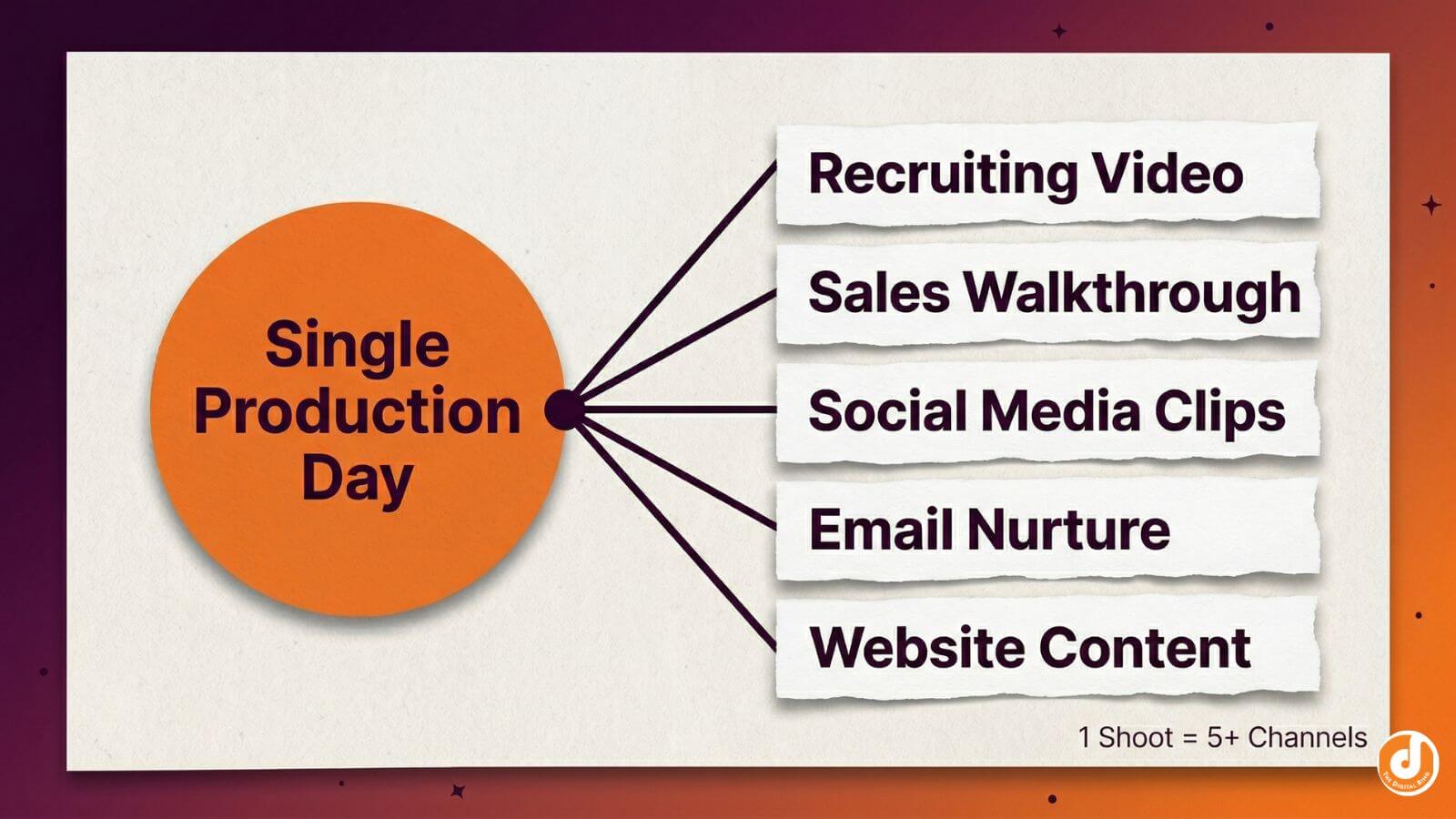
For example, a single production day can yield:
- A recruiting video
- A product demonstration
- Short-form content for social media
- Clips for email campaigns
- Outtakes and bonus footage for behind-the-scenes content
That approach maximizes output without increasing production time.
If you’re evaluating how to use video in marketing or looking to expand your current approach, the next step is identifying where video can have the most immediate impact across your recruiting, sales, and marketing efforts.
If you want help planning and producing content that actually performs, explore our video production services. We’ll help you figure out what to shoot, where to use it, and how to make it worth the investment.
share this article
.jpg)

Get In touch
We’d love to share how digital marketing can help elevate your brand — and your business’s bottom line.


821 E Washington Ave #200
Madison, WI 53703
608.836.7464


